
Middle East Pipeline Investments Shift Oil Logistics Beyond Hormuz
Structural shifts in oil transit routes and regional pipeline expansions in the UAE and Iraq redefine global maritime energy logistics.
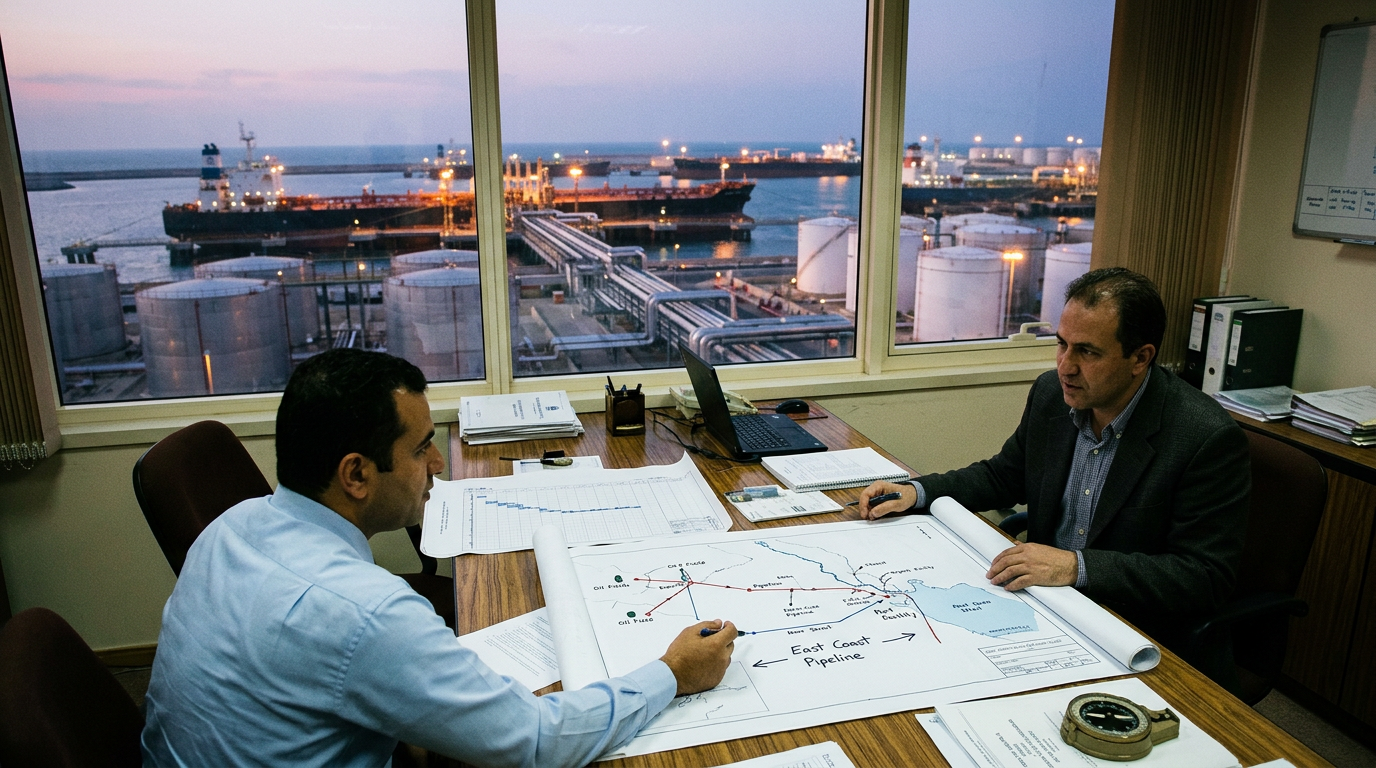
Global crude logistics are adjusting to lasting structural changes rather than temporary market swings. Industry leadership points to enduring transformations across key shipping lanes, notably around the Strait of Hormuz. Alkagesta chief executive Orkhan Rustamov recently outlined these shifts during discussions with financial media, highlighting that baseline conditions in the sector have fundamentally altered.
Maritime bottlenecks in critical Middle Eastern waterways have accelerated the demand for alternative overland transport solutions. Ongoing volatility near the Strait of Hormuz has prompted producers and energy logistics providers to rethink conventional transit routes. Consequently, infrastructure initiatives are gaining traction as regional operators seek to bypass vulnerable maritime chokepoints.
Pipeline developments across the United Arab Emirates and Iraq represent vital components of this strategic repositioning. These terrestrial energy corridors offer direct pathways that mitigate reliance on high-risk tanker corridors. By expanding pipeline capacity, regional exporters aim to maintain consistent export volumes despite maritime turbulence.
For commercial charterers and maritime freight planners, these routing adjustments require adaptive operational frameworks. Supply chain stakeholders must integrate multimodal logistics to address the reduced predictability of traditional sea lanes. The establishment of bypass infrastructure signals a permanent evolution in how hydrocarbons move between production hubs and global markets.
Long-term market projections now account for a distributed transportation matrix rather than a single dominant maritime conduit. Energy security strategies increasingly prioritize redundancy through integrated pipeline and port infrastructure. As noted by sector executives, the international oil trade is entering an era defined by diversified delivery networks rather than a return to legacy norms.
Source & editorial attribution
- Original source
- Alkagesta
- Source headline
- Orkhan Rustamov in City A.M. on Oil Market Disruption
- Source published
- 5 Aug 2026, 09:52 UTC
Read the original announcement
This is an original editorial summary prepared with automated assistance from the attributed source material, checked for factual consistency against that source and published under our AI & content policy. It is not an independently reported story. Spotted an error? Request a correction.
Daily briefing
Blue Ocean Chartering — Market & Trade Briefing
A concise morning briefing on commodity, energy, fuel oil and shipping developments — written for traders, brokers, owners, operators and analysts. Source-attributed, no hype.
We use your address only to send the briefing. Unsubscribe in one click. Browse past editions.
More from Oil Markets
All coverage
Oil Markets2 min read
Alkagesta Explores Energy Trade and Logistics at Angola Oil & Gas 2026
Alkagesta took part in the Angola Oil & Gas 2026 summit in Luanda, focusing on energy investments, market dynamics, and global supply chain logistics.
Oil Markets4 min read
European Gasoline Market Outlook: August 2026 Analysis
A structural deficit in blending components combined with a logistics collapse on the Rhine River pushed European gasoline markets into deep backwardation during August 2026, according to the latest commodity insights from Alkagesta.

Oil Markets4 min read
Fuel Oil Market Outlook: Logistical and Diplomatic Deadlocks Pressure Global Supply
A combination of stalled diplomacy in the Middle East and a logistical crisis on the Rhine has created significant disruptions in global fuel oil markets, driving inventory builds in coastal hubs while tightening inland supply.
Oil Markets2 min read
Alkagesta CEO Examines Structural Instability in Global Oil Markets
Orkhan Rustamov, CEO of Alkagesta, argues that the historical stability of the global oil market has been permanently compromised by recent regional conflicts and supply chain disruptions.